
Begin with the stretch of life you are most afraid to lose.
Memory should be told
Memories should not stay trapped as isolated notes
The memoir feature exists because records alone are not enough. People want to revisit a life, not just browse disconnected entries.
- AI chats
- 1M+
- Personality fit
- 98%
- Support
- 24/7
- Memories
- 228
AI
Kimi seems relaxed today. Want to turn this into a diary note?
Make it warmer
Today's insight
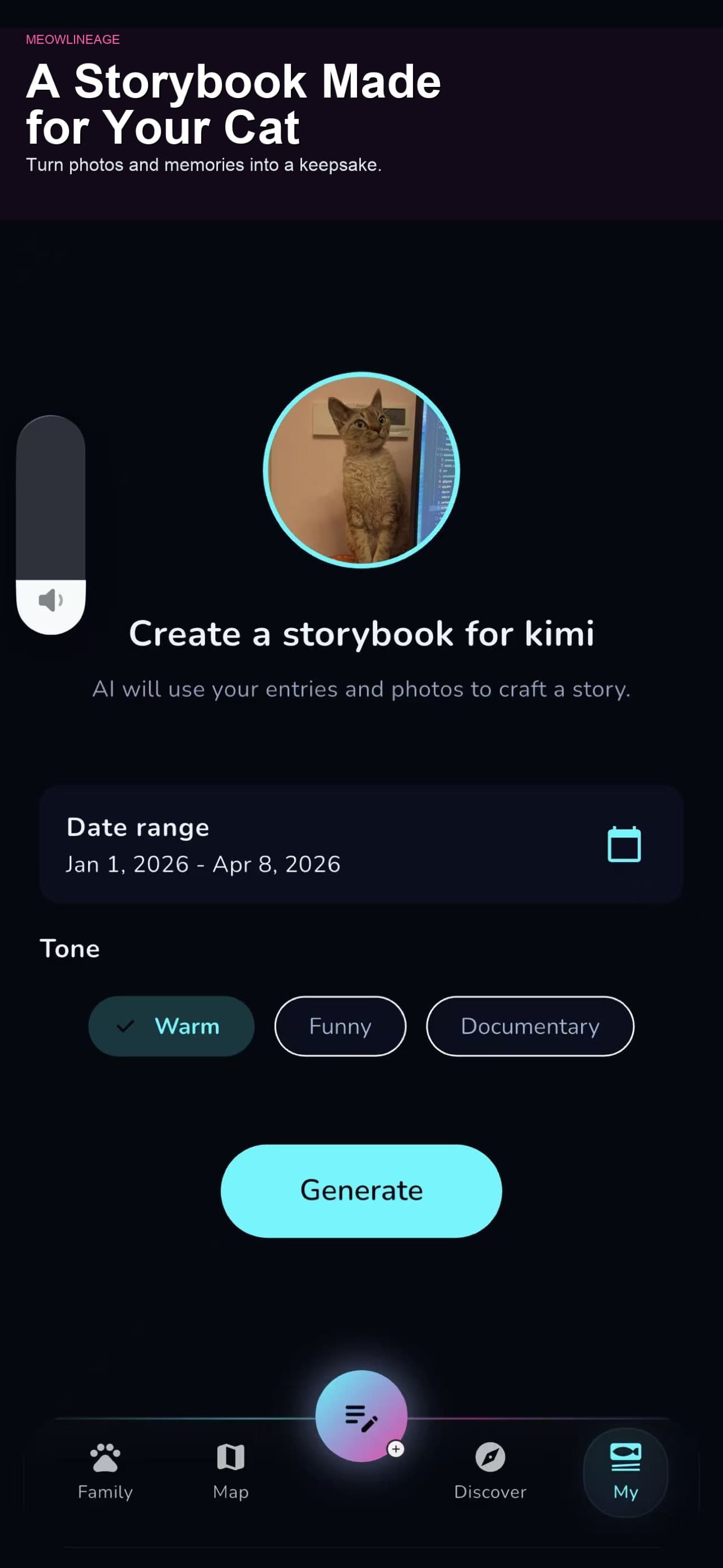
Generate a revisitable cat story from diary entries, photos, and behavior clues.
Why AI Storybook matters
Photos, notes, milestones, and health records are valuable, but they often remain fragmented. Over time, what was once vivid becomes harder to reconstruct.
AI Storybook helps connect those fragments into a fuller narrative so memory is not only preserved, but also told in a way that feels human and revisitable.
Give that memory a tone that sounds closer to how it really felt.
Then let the fragments gather themselves into something you can read again later.
How people use it
What an AI pet memoir is actually useful for
The value is not automatic text by itself. The value is turning scattered records into a readable story that still feels grounded in real moments.
Turning diary entries, milestones, and photos into a memory book you can revisit or share with family.
Creating a gentler long-form record when you want to preserve a cat's life after years of scattered notes.
Giving cat parents a way to organize story material before it fades into disconnected fragments.
Keep this part of your cat's story connected.
This is how scattered records become something you can treasure, revisit, and one day pass on.
Related guides
Read the search-focused memory guides
These pages speak directly to users looking for memorial and memory-book workflows.
How AI pet memoirs work when the source material is real
Use diary entries, milestones, and photos to build a readable memory book.
Read guideHow to keep a cat diary that is still useful later
Organize photos, milestones, routines, and health notes with context.
Read guideFAQ
AI pet memoir FAQ
Direct answers for people comparing memory-book and memorial tools.
What makes an AI pet memoir useful?
It becomes useful when the AI is grounded in real diary entries, photos, milestones, and long-term notes rather than inventing a story from nothing.
Is this only for memorial use?
No. It can be used while a cat is growing up, after a major life stage, or later as a memorial record. The key is preserving the story over time.
What kind of source material should I save first?
Start with dated photos, short daily notes, milestones, and the details you tend to forget first. Those small facts give the memoir emotional accuracy later.